CNA Courses Online: A Flexible Path Into Healthcare
The demand for compassionate, skilled healthcare workers continues to rise, and Certified Nursing Assistants (CNAs) play a vital role on the front lines of patient care. For many aspiring professionals, online CNA courses offer a convenient and accessible way to begin this rewarding career. But how do these programs work, and are they the right fit for you? Let’s break it down in a clear, practical way.
What Is a CNA?
A Certified Nursing Assistant provides basic care to patients in hospitals, nursing homes, and long-term care facilities. Daily responsibilities often include:
- Assisting with bathing, dressing, and hygiene
- Monitoring vital signs like blood pressure and temperature
- Helping patients move safely
- Supporting emotional well-being through companionship
CNAs are often the primary point of contact for patients, making their role both hands-on and deeply meaningful.
How Online CNA Courses Work
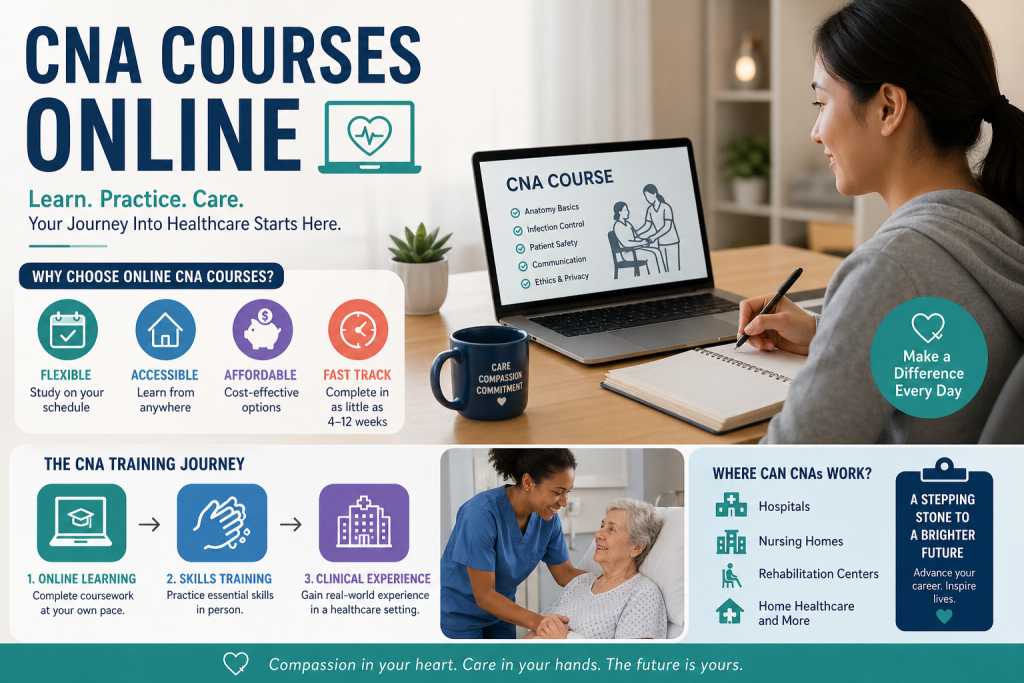
Online CNA programs blend digital learning with in-person training. While you can complete the theoretical portion online, hands-on clinical practice is still required to meet certification standards.
Typical structure includes:
- Online Coursework
- Anatomy and physiology basics
- Infection control
- Patient safety and ethics
- Communication skills
- Skills Training (In-Person)
- Practicing procedures like lifting patients and taking vitals
- Clinical Experience
- Real-world practice in a healthcare setting under supervision
This hybrid model allows students to study at their own pace while still gaining essential practical experience.
Benefits of Taking CNA Courses Online
Flexibility
Online learning lets you fit coursework around your schedule, making it ideal for working adults or parents.
Accessibility
You can enroll in programs outside your immediate area without commuting for every lesson.
Cost-Effective Options
Many online CNA programs are more affordable than traditional in-person courses, and some even offer payment plans.
Faster Completion
Some programs can be completed in as little as 4–12 weeks, helping you enter the workforce quickly.
Things to Watch Out For
Not all online CNA programs are created equal. Before enrolling, consider the following:
- Accreditation: Ensure the program meets your region’s certification requirements
- Clinical Placement: Confirm that the school helps arrange in-person training
- Exam Preparation: Look for programs that prepare you for the state competency exam
- Hidden Costs: Check for extra fees for materials, uniforms, or testing
Skipping these checks can lead to wasted time and money, so it’s worth doing a bit of research upfront.
Who Should Consider Online CNA Training?
Online CNA courses are a great fit if you:
- Need a flexible learning schedule
- Prefer self-paced study
- Are looking for a quick entry into healthcare
- Plan to advance later into nursing or other medical roles
However, if you struggle with self-discipline or prefer face-to-face instruction, a fully in-person program might suit you better.
Career Outlook After Certification
Once certified, CNAs can work in various settings, including:
- Hospitals
- Aged care facilities
- Rehabilitation centers
- Home healthcare services
Many CNAs use this role as a stepping stone toward becoming licensed practical nurses (LPNs) or registered nurses (RNs), making it a smart entry point into the healthcare field.
Final Thoughts
Online CNA courses offer a practical and flexible pathway into one of the most essential roles in healthcare. While they require commitment—especially for the hands-on portion—they can open doors to stable employment and long-term career growth.
If you’re serious about helping others and want a fast, accessible way to get started, an online CNA course could be exactly what you’re looking for.